
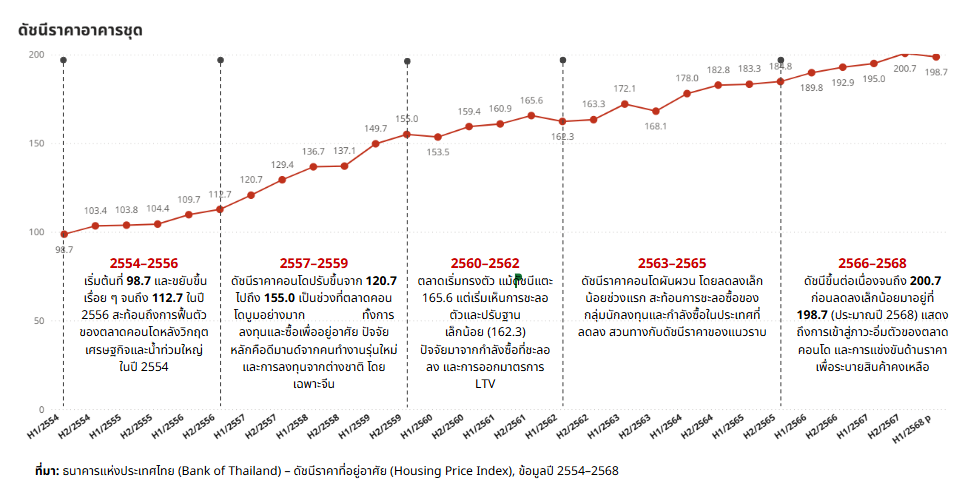
ข้อมูลดัชนีราคาอาคารชุดตั้งแต่ปี 2554 ถึงครึ่งแรกของปี 2568 แสดงให้เห็นถึงการเติบโตอย่างต่อเนื่อง แม้จะมีบางช่วงที่ผันผวน โดยดัชนีเพิ่มจาก 98.7 ในครึ่งแรกปี 2554 เป็น 198.7 ในครึ่งแรกปี 2568 หรือคิดเป็นการเติบโตกว่า 101% ในรอบ 15 ปี
- 2554-2556: เริ่มต้นที่ 98.7 และขยับขึ้นเรื่อย ๆ จนถึง 112.7 ในปี 2556 สะท้อนถึงการฟื้นตัวของตลาดคอนโดหลังวิกฤตเศรษฐกิจและน้ำท่วมใหญ่ในปี 2554
- 2557-2559: ดัชนีราคาคอนโดปรับขึ้นจาก 120.7 ไปถึง 155.0 เป็นช่วงที่ตลาดคอนโดบูมอย่างมาก ทั้งการลงทุนและซื้อเพื่ออยู่อาศัย ปัจจัยหลักคือดีมานด์จากคนทำงานรุ่นใหม่ และการลงทุนจากต่างชาติ โดยเฉพาะจีน
- 2560-2562: ตลาดเริ่มทรงตัว แม้ดัชนีแตะ 165.6 แต่เริ่มเห็นการชะลอตัวและปรับฐานเล็กน้อย (162.3) ปัจจัยมาจากกำลังซื้อที่ชะลอลง และการออกมาตรการ LTV
- 2563-2565: ดัชนีราคาคอนโดผันผวน โดยลดลงเล็กน้อยช่วงแรก สะท้อนการชะลอซื้อของกลุ่มนักลงทุนและกำลังซื้อในประเทศที่ลดลง สวนทางกับดัชนีราคาของแนวราบ แต่กลับมาขึ้นถึง 184.8 ในปี 2565
- 2566-2568: ดัชนีขึ้นต่อเนื่องจนถึง 200.7 ก่อนลดลงเล็กน้อยมาอยู่ที่ 198.7 (ประมาณปี 2568) แสดงถึงการเข้าสู่ภาวะอิ่มตัวของตลาดคอนโด และการแข่งขันด้านราคาเพื่อระบายสินค้าคงเหลือ
พฤติกรรมผู้ซื้อเปลี่ยนไป
หลังโควิด ผู้บริโภคเริ่มมองหาที่อยู่อาศัยที่กว้างขึ้น เช่น บ้านเดี่ยวหรือทาวน์โฮม ทำให้ดีมานด์คอนโดชะลอในบางทำเล
ปัจจัยภายนอกกดดันราคา
อัตราดอกเบี้ยขาขึ้น ต้นทุนก่อสร้าง และกำลังซื้อที่ลดลงบางส่วน ส่งผลให้ราคาคอนโดไม่สามารถปรับขึ้นแรงเหมือนในอดีต
ที่มา: ธนาคารแห่งประเทศไทย (Bank of Thailand) - ดัชนีราคาที่อยู่อาศัย (Housing Price Index), ข้อมูลปี 2554-2568
Bangkok Condominium Price Trends: Insights from the Condominium Price Index
The condominium price index from 2011 to the first half of 2025 shows consistent long-term growth, despite periods of fluctuation. The index rose from 98.7 in H1 2011 to 198.7 in H1 2025, representing more than 101% growth over 15 years.
- 2011-2013: The index started at 98.7 and gradually climbed to 112.7 by 2013, reflecting the recovery of the condominium market after the economic downturn and the severe floods in 2011.
- 2014-2016: Prices surged from 120.7 to 155.0, marking a condominium boom driven by both end-user demand from younger professionals and strong foreign investment, especially from China.
- 2017-2019: Growth began to stabilize, with the index peaking at 165.6 before adjusting slightly to 162.3. The slowdown was mainly due to weaker purchasing power and the introduction of the Loan-to-Value (LTV) regulations.
- 2020-2022: The index became volatile, with a slight decline in the early phase, reflecting weakened demand from investors and domestic buyers-contrasting with rising landed property prices. However, it rebounded to 184.8 by 2022.
- 2023-2025: The index continued upward to 200.7 before easing slightly to 198.7 in 2025, indicating a maturing condominium market and growing price competition as developers sought to clear inventory.
Key Insights
- Urban Lifestyle Appeal
Despite fluctuations, condominiums remain the most popular choice for city living in Bangkok, particularly for younger buyers and investors seeking rental income. - Impact of Economic and Social Factors
The pandemic reshaped buyer behavior, shifting some demand toward larger living spaces like single detached houses and townhomes. This explains the slight decline in condo prices post-2022.
Developer Adaptation
Many developers are repositioning their projects by focusing on affordable condos in emerging locations or premium lifestyle condos near mass transit to attract both end-users and investors.